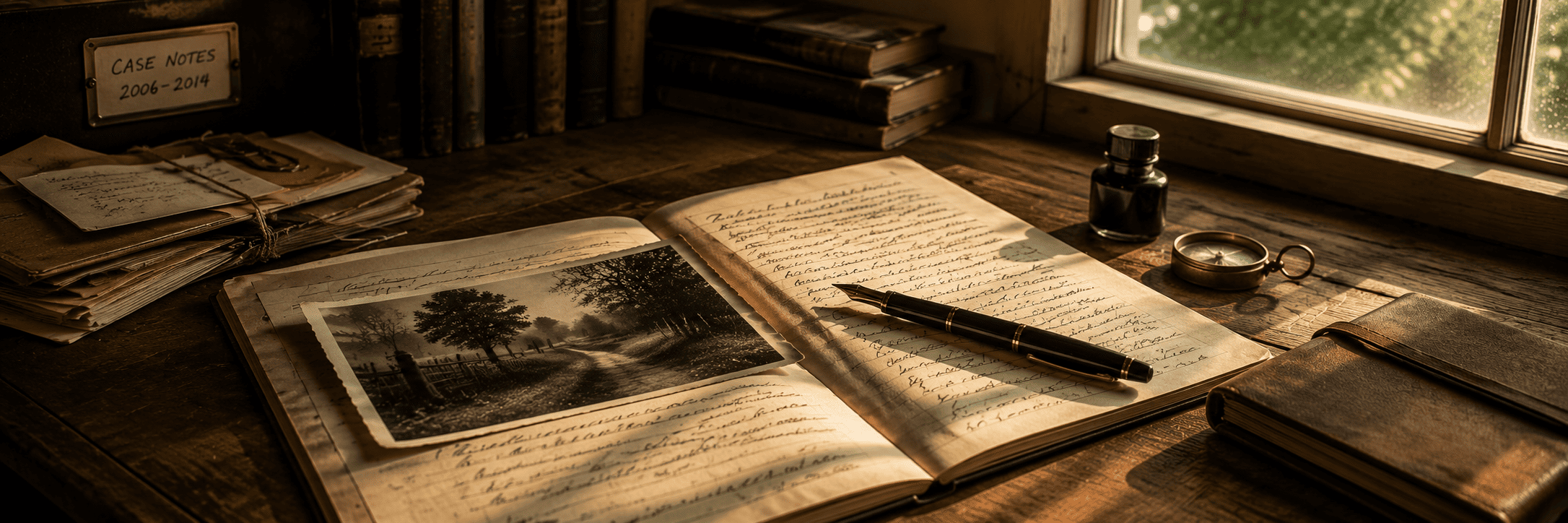
Why Memory Fails
Memory is a remarkable thing. It helps us live with the past. It was never designed to preserve it.
People often apologise for forgetting.
They tell me they cannot remember the exact words. They are uncertain about the date. They are no longer sure who was standing in the room or which way the conversation turned.
I usually tell them not to worry.
Memory is not a recording. It is not an archive waiting to be opened. It is something far more human than that. Every time we remember an event, we rebuild it. We fill gaps without noticing. We smooth rough edges. We connect moments that may never have belonged together in the first place.
That is not a weakness. It is how people make sense of their lives.
The difficulty begins years later, when someone asks what really happened.
By then, two honest people can remember the same afternoon in entirely different ways. Neither is trying to deceive me. Both are describing the past as they have come to understand it.
That is why I value records. Not because they replace memory. They cannot.
A photograph cannot tell me what someone felt. A diary cannot reveal every thought left unwritten. A recording captures only what happened after someone pressed the button.
But together they give memory something solid to return to. Without them, the past becomes a story that changes each time it is told. Perhaps that is inevitable.
Perhaps remembering has always been less about preserving the past than learning how to live with it.