Why Evidence Matters
People tell stories because they remember. Evidence matters because memory changes.
People sometimes think evidence exists to prove people wrong.
It doesn't.
Most of the people I have interviewed genuinely believed they were telling me the truth. They remembered a conversation one way. Someone else remembered it differently. Neither was lying. Both were trying to make sense of something that had happened months, years or even decades earlier.
That is what memory does. It changes quietly, usually without asking our permission.
Evidence serves a different purpose.
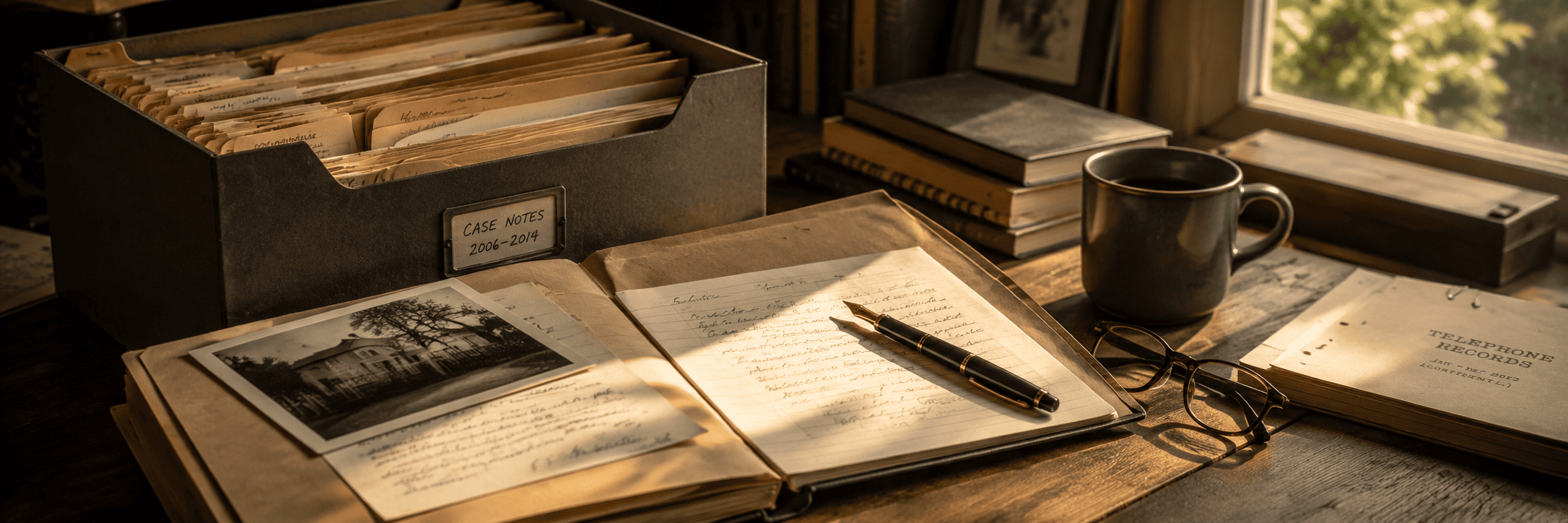
A receipt tells me where someone was. A photograph tells me that a moment existed. A letter tells me what somebody chose to write on a particular day. A timestamp tells me when something happened. None of these things explains everything. None of them can tell me what someone was thinking or why they acted as they did.
Evidence is never the whole story.
But without it, all that remains are competing versions of the past, each becoming a little more certain and a little less reliable as time passes.
That is why I collect records so carefully. Not because I believe they contain absolute truth. They don't.
They simply give us somewhere solid to begin.
Every investigation I have ever completed started with a fragment. A document. A recording. A forgotten photograph. Something ordinary that survived when memory alone could not.
Evidence cannot answer every question. It can, however, stop us asking the wrong ones.