What We Choose to Keep
There is a temptation to believe that history is built from important events. Wars. Elections. Great discoveries. They deserve their place, but they are not what most people leave behind.
Most people leave drawers.
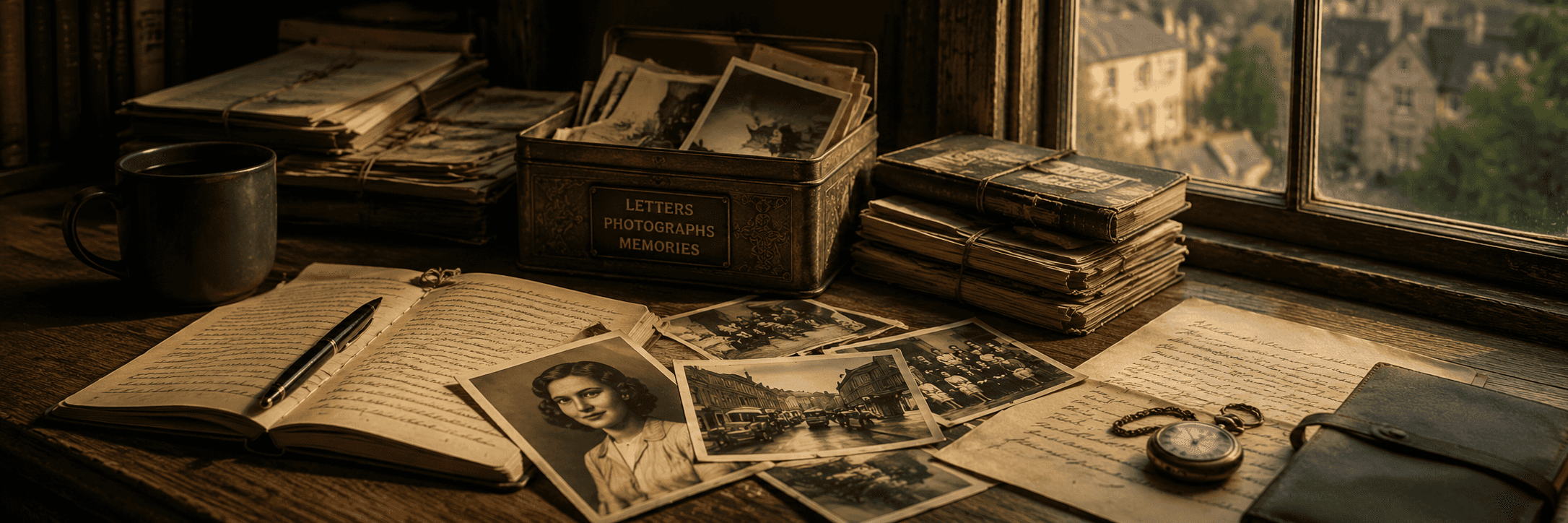
They leave biscuit tins filled with photographs. Envelopes that contain letters nobody has read for thirty years. Diaries that stop halfway through a sentence because ordinary life became too busy to continue writing. Recipe books with handwritten notes squeezed into the margins. Birthday cards that were never thrown away for reasons nobody can quite explain.
None of those things were intended for history. They survive because someone could not bear to part with them.
I have spent enough years examining computers to know that digital life is remarkably similar. People rarely preserve what is objectively important. They preserve what feels important. A folder full of holiday photographs. An email that begins, "Just checking you got home safely." A voice message they could easily have deleted but never did.
If you looked at those things as data, they would appear insignificant. They occupy almost no space. They contain very little information.
If you looked at them as evidence of a life, they become something else entirely.
I have often wondered why one object survives while another disappears. Sometimes there is a practical explanation. Sometimes there is not. A family may throw away a box of official papers but keep a shopping list because it was written in someone's familiar handwriting. Logic has very little to do with it.
Love has rather more.
Investigators are trained to notice what remains. That is an important habit, but it is only half the work. We should also ask why it remained. Who decided this letter should be kept? Why did this photograph stay in the frame while dozens of others disappeared? Those decisions are rarely random.
They tell us something about the people who made them.
Perhaps that is why I have become less interested in collecting facts than in understanding choices.
The things we keep are not always the most valuable. They are often the things we could not quite bring ourselves to lose.